08
Offline and Contactless Limits
A tap can succeed before anyone has checked with the issuer. The ceiling on that tap is a local rule, not a universal one.
The reader on the bus has no signal, and it still beeps when you tap. You are not sure whether the fare was paid, or only queued.
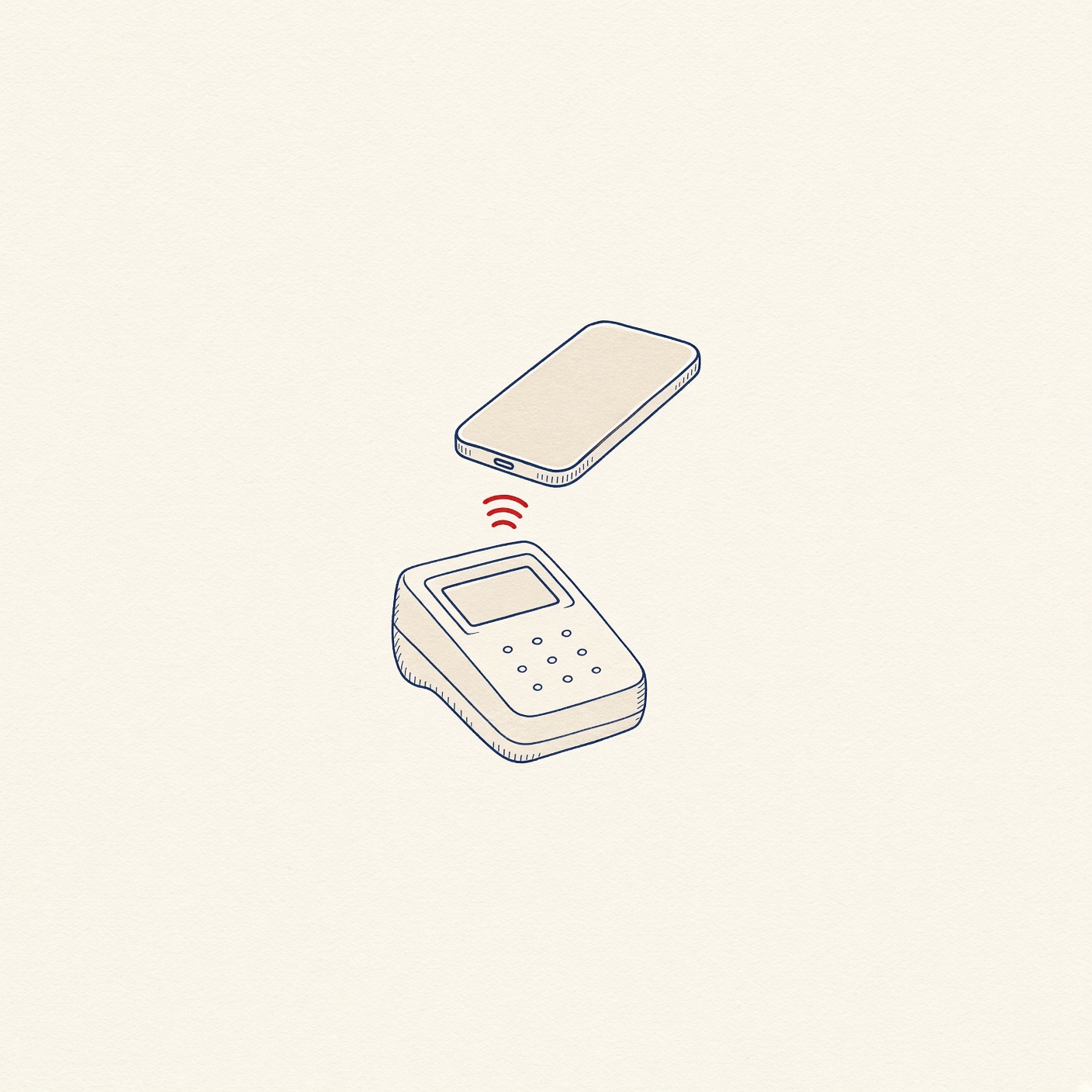
Contactless is a way of presenting a card or a phone to a terminal at very short range. It is not, by itself, a promise that the issuer approved the purchase in that second. Many taps are checked online immediately. Some are accepted within a limit and checked later, or checked against a record kept on the card or the device. Transit gates are a familiar case: the gate opens, and the fare is settled after the journey or at the end of the day.
An offline or delayed approval exists because networks fail and because a queue will not wait. The terminal, the card, or the wallet is allowed to say yes up to a ceiling, sometimes called a floor limit, and to store the transaction until a connection returns. If the later check fails, you may see a decline, a debt the merchant still claims, or a charge that posts on a different day from the trip. The beep only meant the reader accepted the tap.
Above a certain amount, the terminal usually asks for a stronger check: a PIN, a signature, or a biometric on the phone. That threshold is a contactless limit. It is set by country, by network, and sometimes by the issuer, and it has been raised and lowered over time. A phone wallet may apply its own device check even when the amount is under the terminal’s limit. A plastic card may not. Two taps of the same account can therefore feel different.
There is a risk trade-off. A higher limit is faster and more useful, and it is also more useful to someone holding your unlocked phone or your card for a few minutes. Cumulative limits exist in some designs so that many small offline taps cannot run without a check. You will not see those counters. You see the result later, as a decline that seems to arrive after several ordinary purchases.
Do not assume the figure you met on a trip still applies at home, or that a wallet and a plastic card share it. Ask the issuer what the contactless ceiling is on each credential, whether a bus or a flight can post after you have finished travelling, and how an offline tap appears on the statement. A missing line on the day of travel is not the same as a missing payment.
Take these with you
Questions worth asking your provider
Prompts for a conversation with the institution that holds the account. They are not a checklist that makes one product suitable.
- 01What is the contactless limit on this card, and is it different for the wallet?
- 02Can a terminal accept a tap without reaching the issuer, and up to what amount?
- 03When does a transit or other delayed fare actually post?
- 04How is an offline tap described on the statement if the connection returns the next day?
This note is general information. It is not financial, legal, or tax advice, and it is not a recommendation to open, close, or change an account.