09
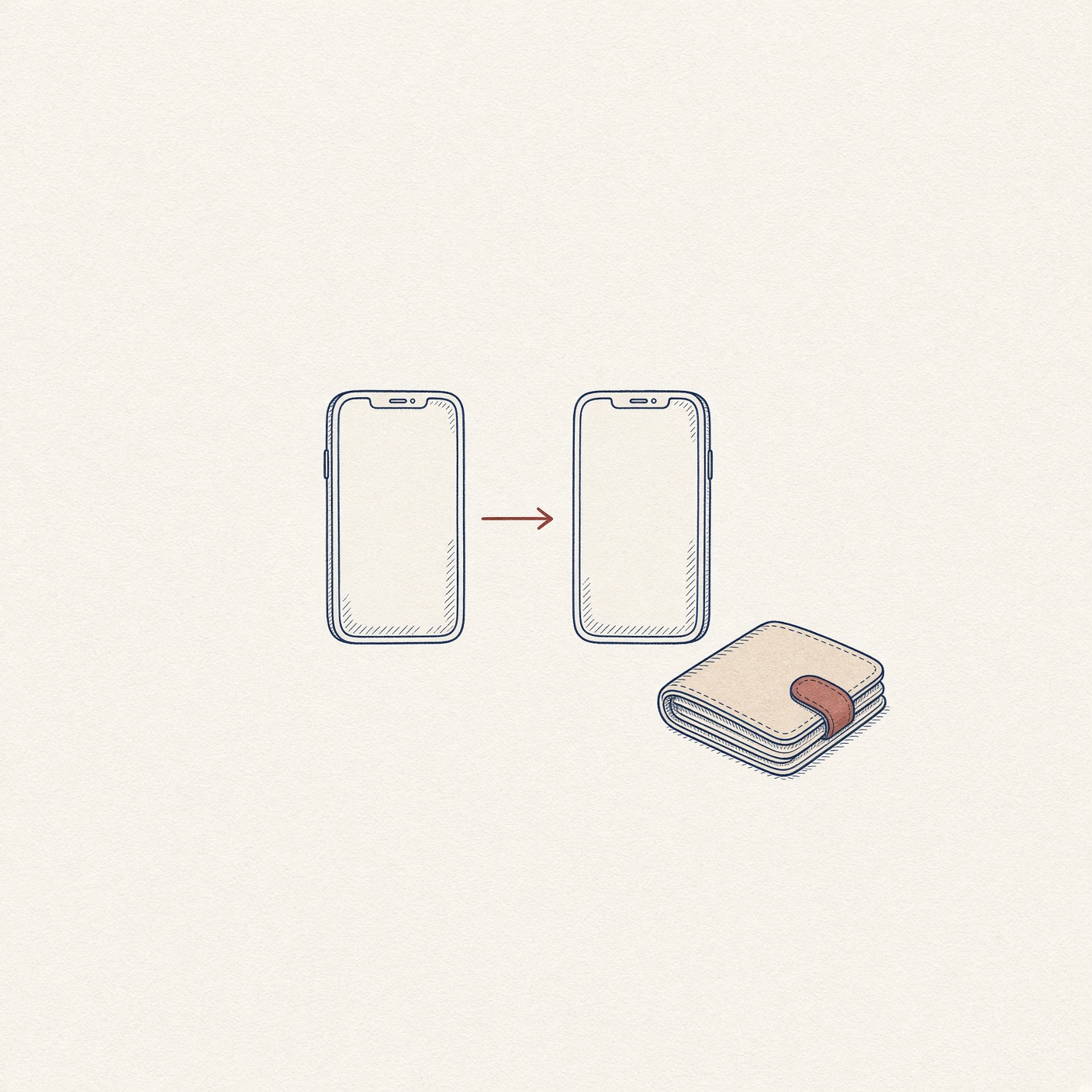
Peer-to-Peer Payments vs Card Wallets
Sending money to a person and paying a merchant are different rails, with different ways to undo a mistake.
A friend asks you to send the cost of dinner. One app moves money between accounts, while the wallet on your phone is built to pay a merchant.
A card wallet presents a card credential to a business. The merchant has an agreement with an acquirer, the payment follows card-network rules, and a later dispute may be possible under those rules. A peer-to-peer payment sends value to a person, or to that person’s balance in an app. It may move across a bank transfer system, a card pull into an app balance, or a closed ledger the app operates. The screen can look similar. The path underneath is not.
The difference shows up when the recipient is wrong. Card dispute processes were built for disagreements with merchants: goods that did not arrive, charges you do not recognise, amounts that do not match. Sending money to a person you mis-identified is often treated as an authorised transfer. Some apps will ask the recipient to return it. Some bank rails will try a recall. Neither is the same as a card chargeback, and neither is assured. Check the name and the identifier before you confirm, not after.
Speed is part of the design. Many person-to-person services advertise that the other party can use the money quickly. That speed is the reason a recall is hard. A payment that is still pending may be stoppable. A payment that has been accepted often is not. A card wallet purchase can also be fast at the terminal and still be a pending authorisation rather than a final movement of funds. Do not read one habit into the other.
There is a second confusion about where the money sits. An app balance is not automatically the same as a bank deposit. It may be held by a payments firm, protected under electronic-money rules in some countries, or simply owed to you by the company. A card wallet usually does not hold the funds at all. It instructs the issuer. If an app is unavailable, access to an in-app balance and access to the underlying account can fail separately.
These services are regulated differently from place to place, and a single app may be a wallet in one country and a transfer tool in another. Limits, identity checks, and whether a transfer can be reversed are local. Ask whether you are paying a merchant or sending a transfer, which institution holds the funds after you confirm, and what the realistic path is if you send them to the wrong person.
Take these with you
Questions worth asking your provider
Prompts for a conversation with the institution that holds the account. They are not a checklist that makes one product suitable.
- 01Is this a card payment to a merchant, or a transfer to a person?
- 02Once the other party has accepted it, can it be recalled, and by whom?
- 03Where do the funds sit after you confirm: at your issuer, or in an app balance?
- 04What identifier will you check so the recipient is the person you mean?
This note is general information. It is not financial, legal, or tax advice, and it is not a recommendation to open, close, or change an account.