03
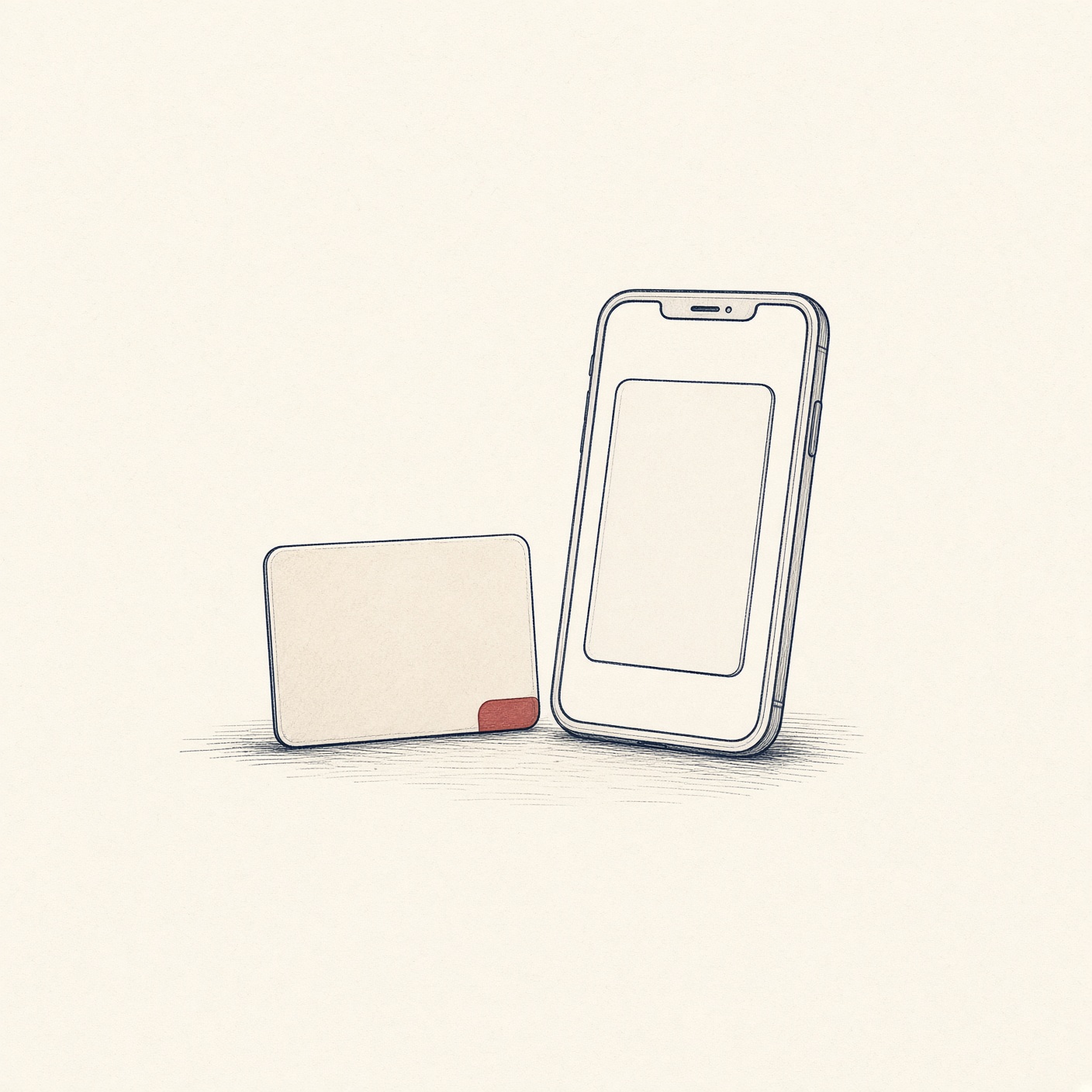
Understanding the Difference Between Virtual and Physical Cards
The account may be the same. The credential, and the way it can be exposed, is not.
You need a hotel deposit tonight, and the only card in your bag is the one you use for the weekly shop. The banking app offers a separate number that lives only on the screen.
A physical card is an object. It carries a chip, a magnetic stripe, or both, and you either present it or type its details. A virtual card is a card number issued in digital form. It may exist only inside a banking app or a wallet. An issuer may limit it to one merchant, a period of time, or a ceiling you set. The plastic and the number are not the same thing.
The account underneath can be the same. What changes is the credential and where it is exposed. A physical card can be mislaid, photographed at a table, or copied at a terminal that still reads a stripe. A virtual number can be copied from a screen, an email, or a stored checkout profile. It will not work in a shop that requires a chip if no physical card was issued. Some issuers let you keep a physical card for travel and in-person use, and a separate virtual number for a single online merchant.
Limits are the useful part, and they are easy to misunderstand. A number that is meant for one merchant may still be accepted by a related company, or by a processor that does not pass the merchant’s name the way you expect. A number that expires after one purchase may be kept alive by a recurring instruction you already approved. Read the issuer’s description of the limit, then check the first statement, rather than treating the label as a guarantee.
Neither format is safer in the abstract. Safety sits with the controls around it: the ability to freeze the credential, alerts when a charge appears, and a clear path to a replacement. Freezing a virtual number should not be confused with closing the account, and freezing the physical card may leave a wallet token working until that token is suspended too.
The split between the two formats still depends on the issuer and the country. Some banks issue a virtual number by default and post the plastic later. Others treat a virtual number as a separate product with its own fees and its own dispute channel. A hotel or a car hire desk may refuse a number that cannot be chipped. Ask what can be switched off without closing the account, and whether a virtual number expires after one use or remains active until you close it.
Take these with you
Questions worth asking your provider
Prompts for a conversation with the institution that holds the account. They are not a checklist that makes one product suitable.
- 01Can the virtual number be frozen without closing the account?
- 02Is it limited to one merchant, one purchase, or a set ceiling?
- 03Will a chip terminal still require a physical card?
- 04How is a replacement issued if the number is exposed?
This note is general information. It is not financial, legal, or tax advice, and it is not a recommendation to open, close, or change an account.